Storage
Choosing Storage Units in Brisbane: Size, Climate and Packing
Choose storage by actual volume, access and climate, not only floor area. Brisbane humidity and flood exposure make preparation especially important.

Storage can bridge settlement dates, protect furniture during renovation or hold belongings while you travel. The expensive mistakes are choosing the wrong size, ignoring access and packing the unit so nothing can be reached.
Brisbane also adds humidity, storms and flood exposure to the decision.
Estimate the volume before choosing a size
Storage providers describe units differently, so confirm actual width, depth and height.
As a broad starting point:
Unit size
Common use
1-2 m² locker
Boxes, luggage and small seasonal items
3-4 m²
A lightly furnished room or studio contents
6-9 m²
A small 1-bedroom home, depending on furniture
10-15 m²
A typical 2-bedroom home
18 m² and above
Larger 2-3 bedroom contents or bulky furniture
These are only planning ranges. A written inventory or volume estimate is more accurate than bedroom count.
If you need regular access, allow space for an aisle. If the unit will stay closed until final delivery, professional stacking can use the volume more efficiently.
Compare access, not only price
Check:
- access hours
- drive-up or internal location
- lift and trolley availability
- truck access and height limits
- distance from parking to unit
- notice period and minimum term
- administration and lock charges
- introductory-price expiry
- after-hours security procedures
A cheaper internal unit can cost more to load if every item travels through a long corridor and small lift.
Plan for Brisbane humidity
Everything must enter storage completely dry.
Use:
- clean, strong cartons
- breathable covers for timber, leather and upholstery
- mattress covers that do not trap moisture
- pallets or a suitable barrier above bare concrete where allowed
- moisture absorbers where appropriate
- climate-controlled storage for sensitive or valuable items
Do not seal damp fabric or leather directly in plastic. Do not store food, pet food, fuel, gas bottles, chemicals or anything prohibited by the facility.
For refrigerators and freezers, clean and dry them fully, then leave doors slightly open to prevent odour and mould.
Check flood exposure and building level
Ask the facility about its flood history and drainage. Consider:
- whether the site is low-lying
- the floor level of your unit
- how water enters the property
- whether important goods can be raised
- emergency access and communication procedures
No storage site is risk-free. Review the facility information and your insurance rather than relying on a verbal assurance.
Understand insurance
Storage fees do not automatically mean the facility insures your belongings. Ask:
- Is any cover included?
- Does your contents policy extend to storage?
- Are flood, mould, pest or water damage excluded?
- Are high-value items declared separately?
- What security requirements must you follow?
Keep an inventory and photographs of valuable items.
Pack the unit so you can use it
- Put heavy, sturdy items at the back and bottom.
- Place frequently needed cartons near the front.
- Leave an aisle if you will return.
- Label the visible side of every carton.
- Keep a numbered inventory on your phone.
- Dismantle bed frames, tables and shelving.
- Store mirrors and large flat items upright and protected.
- Do not place heavy cartons on mattresses or lounges.
- Use the height safely without unstable stacks.
- Photograph the finished unit from the doorway.
Map where important groups are stored. “Christmas, back left, level two” is much more useful than remembering that the decorations are somewhere inside.
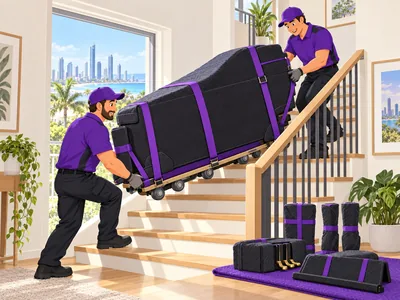
Moving furniture into storage in Brisbane?
SwiftMove can transport household or office contents to and from storage and can help estimate the load volume from an inventory. Explore our furniture transport service or small moves for a partial load, and request an estimate with the facility access details.